Technical architecture
Artrade is built on a modern, modular, and secure architecture designed to scale while maintaining complete transparency. Every technology in our stack was deliberately chosen to serve our core principles: absolute on-chain transparency, uncompromising user security, and a seamless, high-performance user experience. This chapter provides a detailed breakdown of each component of our architecture, from our frontend and backend systems to our independently audited on-chain programs.
Frontend: a fast & simple interface.
Our user interface is built with a modern stack chosen for speed and reliability: Vue 3, Vite, and TypeScript. This combination delivers a fast, lightweight, and highly responsive experience, ensuring seamless blockchain integration and optimized performance on any device. The developer-friendly structure also allows for the rapid and efficient deployment of new features.
Backend: a secure & performant engine.
Our backend is powered by Deno, a modern TypeScript runtime built on Rust and Google's V8 engine. It offers significant performance and security advantages over traditional Node.js environments, including a lower memory footprint and built-in permission controls. Off-chain data (such as user activity, raffle history, and NFT metadata) is managed via Drizzle ORM and MariaDB, providing a type-safe, reliable, and auditable relational database that complements our on-chain records.
Solana programs: audited & battle-tested.
All of Artrade’s on-chain programs, which govern our NFTs, raffles, staking, and escrow logic, have been independently audited by Fuzzland. As a leading blockchain security firm specializing in formal verification and protocol auditing, their review ensures that our on-chain operations are built to the highest standards of security and reliability.
Infrastructure: built for resilience.
Our platform's network security and uptime are handled by enterprise-grade infrastructure providers, utilizing Cloudflare and OVH services. This provides high-availability systems, robust cyber defense, and powerful DDoS mitigation. This infrastructure has successfully withstood multiple large-scale attacks on Artrade with no downtime, ensuring a smooth and uninterrupted user experience.
Core mechanics: a closer look.
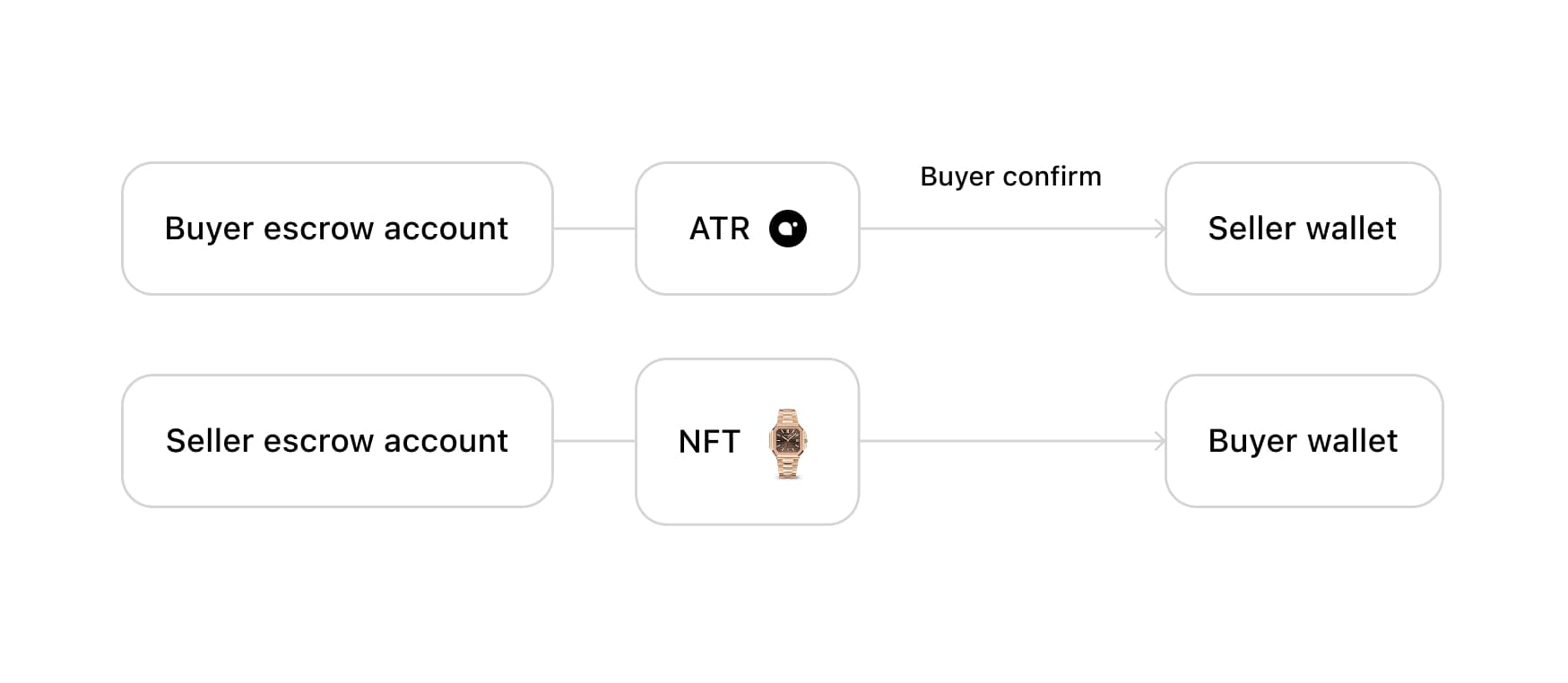
- Escrow (Secondary Market): To ensure secure peer-to-peer trading, our secondary market uses an on-chain escrow system. When a sale is initiated, the seller's NFT and the buyer's funds are transferred to separate PDA (Program Derived Address) accounts. These assets are only released to the respective parties when the buyer confirms receipt of the product. As these PDAs have no private keys and are controlled exclusively by our program, this system drastically reduces the risk of fraud.
- Staking: Our staking feature also operates using individual PDA accounts for each user, rather than a single, pooled vault. This means your funds are never co-mingled with others. In the event of a user account compromise, this architecture allows Artrade to trigger an emergency function to secure the funds in that specific PDA while we work with the user to verify their identity and restore access.
Conclusion: a foundation of trust.
Our technical choices are not arbitrary. The speed of Vue 3, the security of Deno, the transparency of Solana, and the verification of a professional audit all serve a single purpose: to build a platform that is not only powerful and scalable, but fundamentally trustworthy.